
Skip to content
Part of the Original Thinkers series, powered by A.I.

Original Thinker

Harry Beck

1902—1974

The term ‘design’ often brings to mind images of buildings, fashion, or furniture. Yet, some of the most impactful design works are those that exist within the mundane details of our everyday life. One such example is the London Underground map, an iconic design created by Harry Beck. A perfect example of an original thinker in the world of design, Beck’s work forever transformed the way we visually interpret complex transport systems. This article sheds light on Harry Beck’s life, his original thinking, and his significant influence on the world of design.

Born in 1902 in London, Harry Beck was an English technical draftsman who made an indelible mark in design history with his simple yet brilliant design for the London Underground map. Introduced in 1933, Beck’s design broke away from geographical accuracy, focusing instead on clarity and usability. This marked a significant shift in cartography and public information graphics, showcasing Beck’s original thinking.
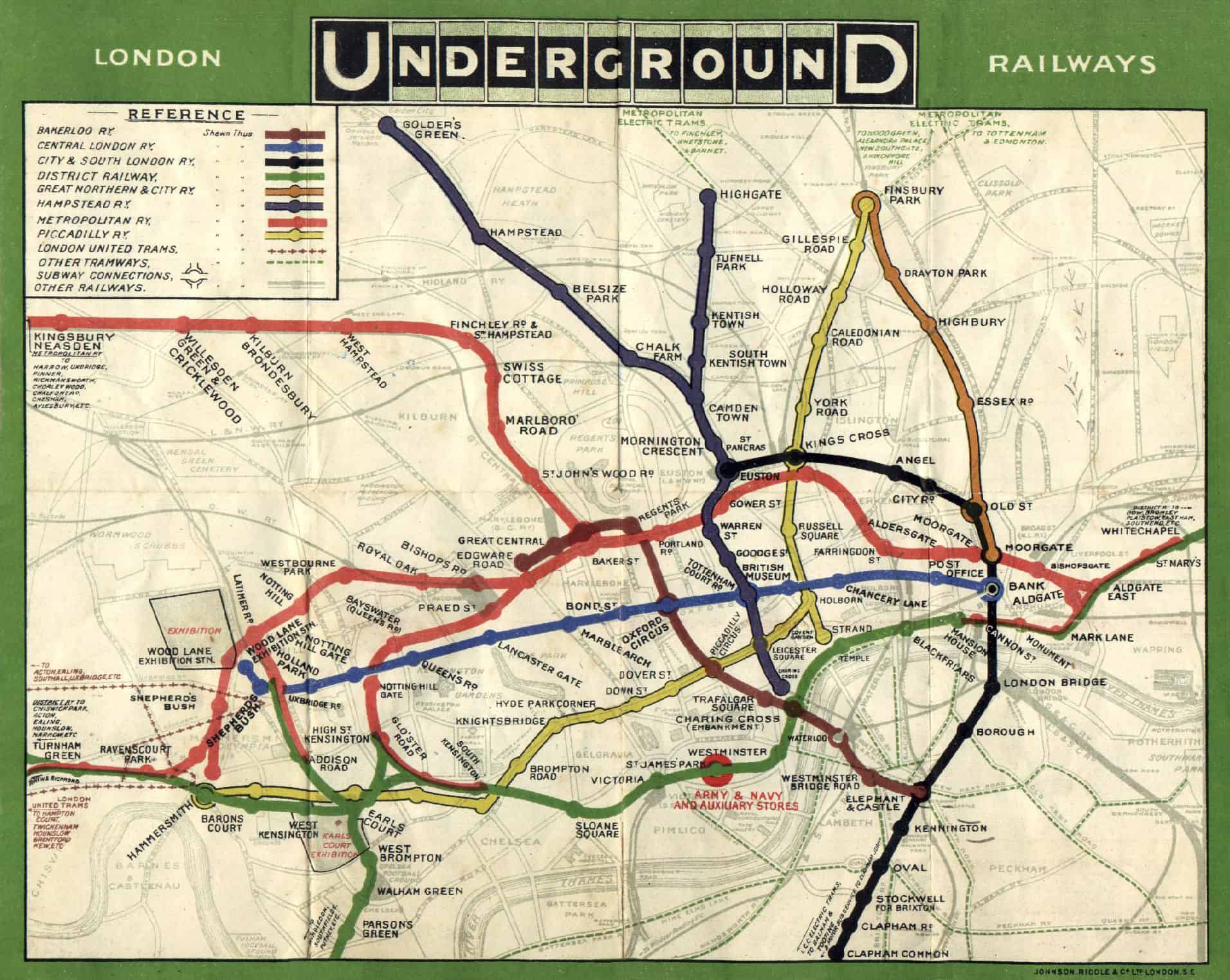

London Underground map from 1908
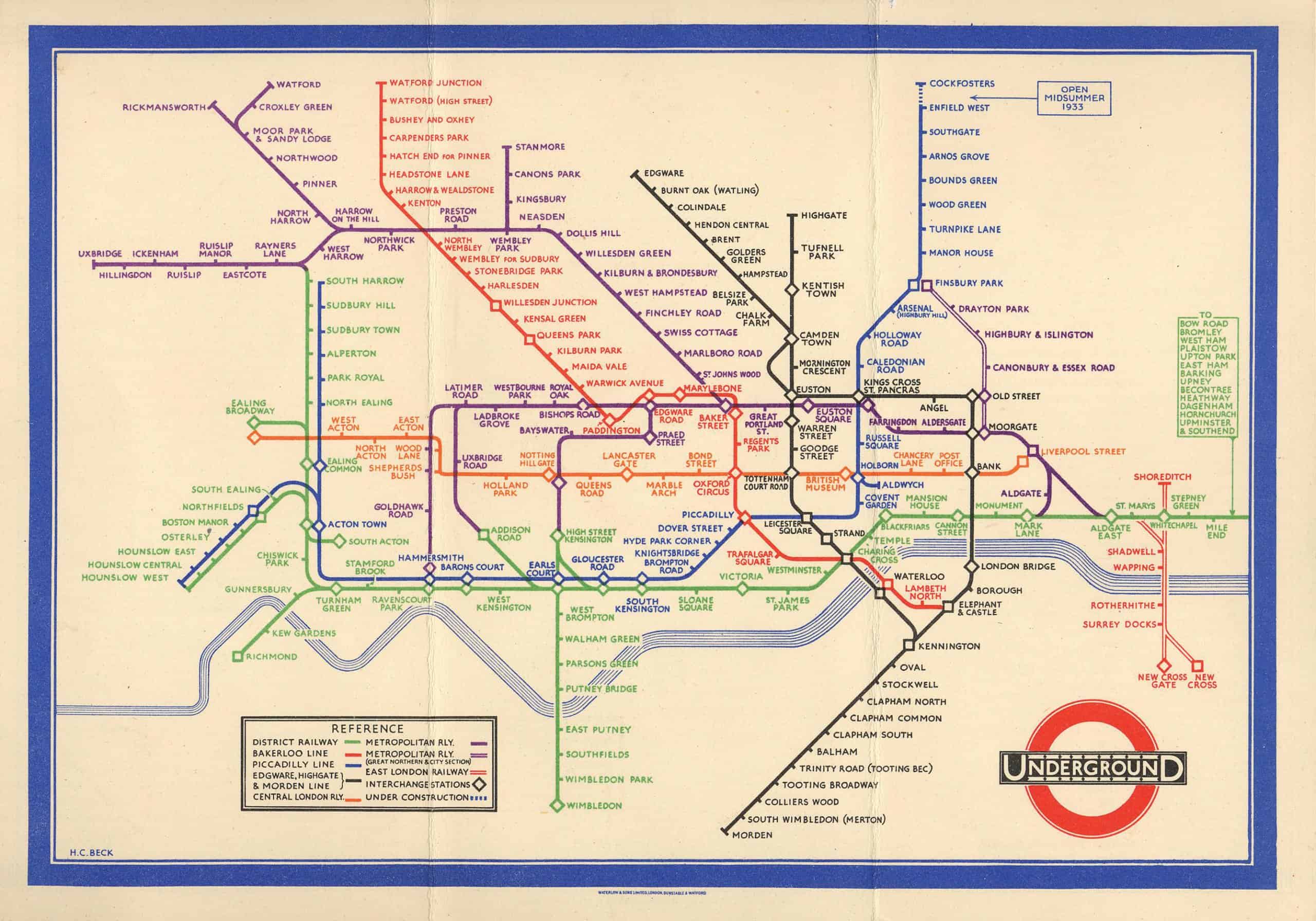
“Instead of replicating the geographic layout of London, Beck represented each tube line as a different colour and stations as simple dots.”

Beck’s design was groundbreaking in its abstraction. Instead of replicating the geographic layout of London, Beck represented each tube line as a different colour and stations as simple dots. The routes were designed as straight lines in only horizontal, vertical, or 45-degree diagonal directions. The simplification, while initially met with resistance, resulted in an easy-to-navigate and visually compelling map that was quickly adopted by the public.

This innovative approach reflected Beck’s original thinking. His background in electrical engineering inspired the map’s design, with the various train lines resembling a circuit diagram more than a traditional map. This imaginative cross-disciplinary thinking, transferring principles from one field to another, was a testament to Beck’s originality and creativity.

Beck’s influence on design is immeasurable. His abstract, schematic approach to the Underground map became a template for transit maps around the world, from New York to Tokyo. His design has become a universally accepted visual language that makes complex transportation networks understandable at a glance.


Harry Beck ‘s 1933 version of the Tube map used an easy to follow grid system that ignored distance between stops

In addition to his practical influence on public information design, Beck’s work also had broader implications on design philosophy. It emphasised the importance of prioritising the user’s experience, with clear communication and usability at the heart of good design. This user-centric approach is now a fundamental principle in various design disciplines, from graphic design to UX/UI design.

Moreover, Beck’s map transcends its utilitarian purpose, achieving an iconic status in design history and popular culture. It is a fine example of how design, when executed with original thinking and attention to user needs, can create solutions that are both functional and aesthetically appealing.

Harry Beck’s design of the London Underground map showcases the profound impact of original thinking on design. Beck challenged traditional cartographic norms, creating a design solution that remains influential nearly a century later. His work continues to inspire designers around the world, serving as a timeless reminder of the power of simplicity, clarity, and user-centric design. Through his pioneering design, Harry Beck has charted a unique path in the world of design, firmly establishing himself as an original thinker.
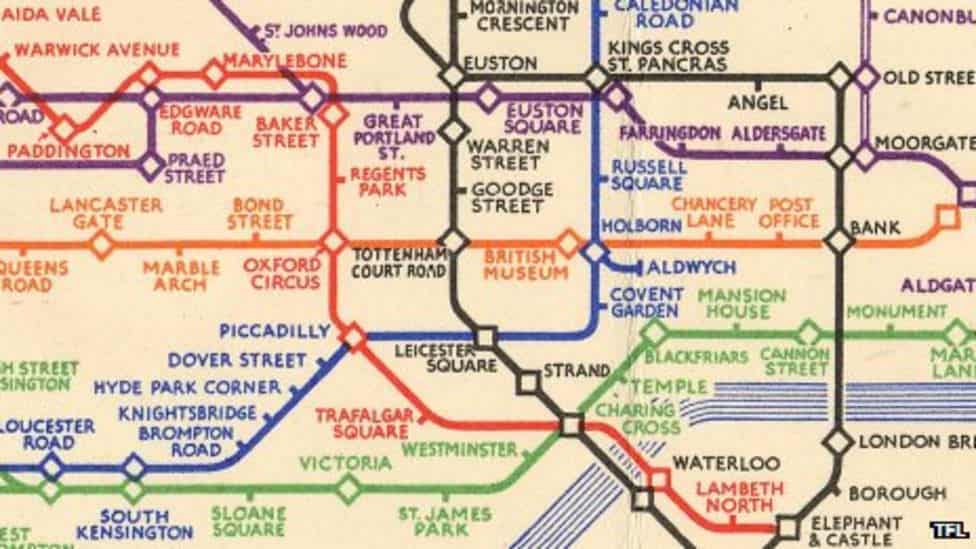

Harry Beck ‘s 1933 version of the Tube map used an easy to follow grid system that ignored distance between stops

This article was written by Artificial Intelligence as part of a series entitled ‘Original Thinkers’ by October Communications.