
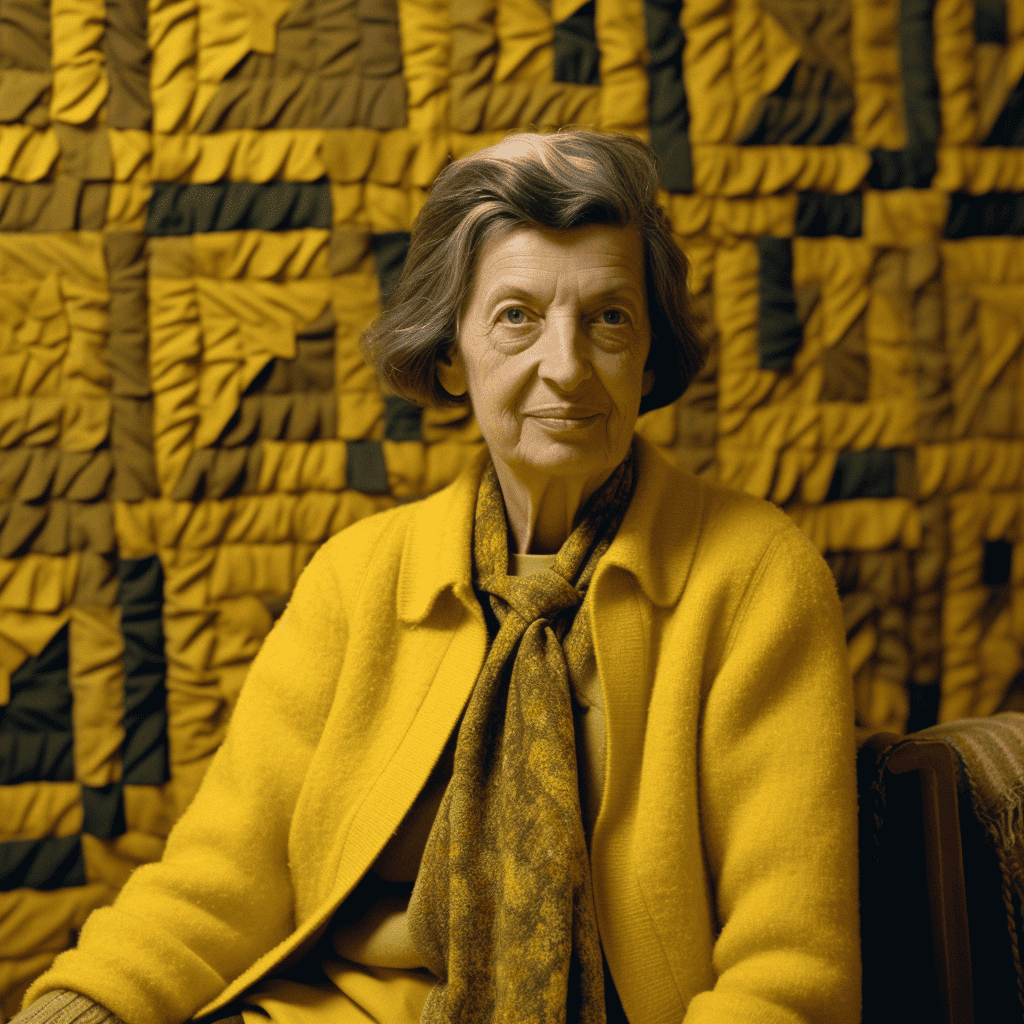
Anni Albers was born Annelise Elsa Frieda Fleischmann in 1899, in Berlin, Germany. Although she initially enrolled at the Bauhaus, a revolutionary German art school, to study glass, it was the world of weaving that would ultimately captivate her. The Bauhaus school’s gender-biased policies pushed her into the weaving workshop, an area reserved for women. Little did anyone realize then that this redirection would lead to the emergence of an artistic maverick who would forever change the world of textile art and design.
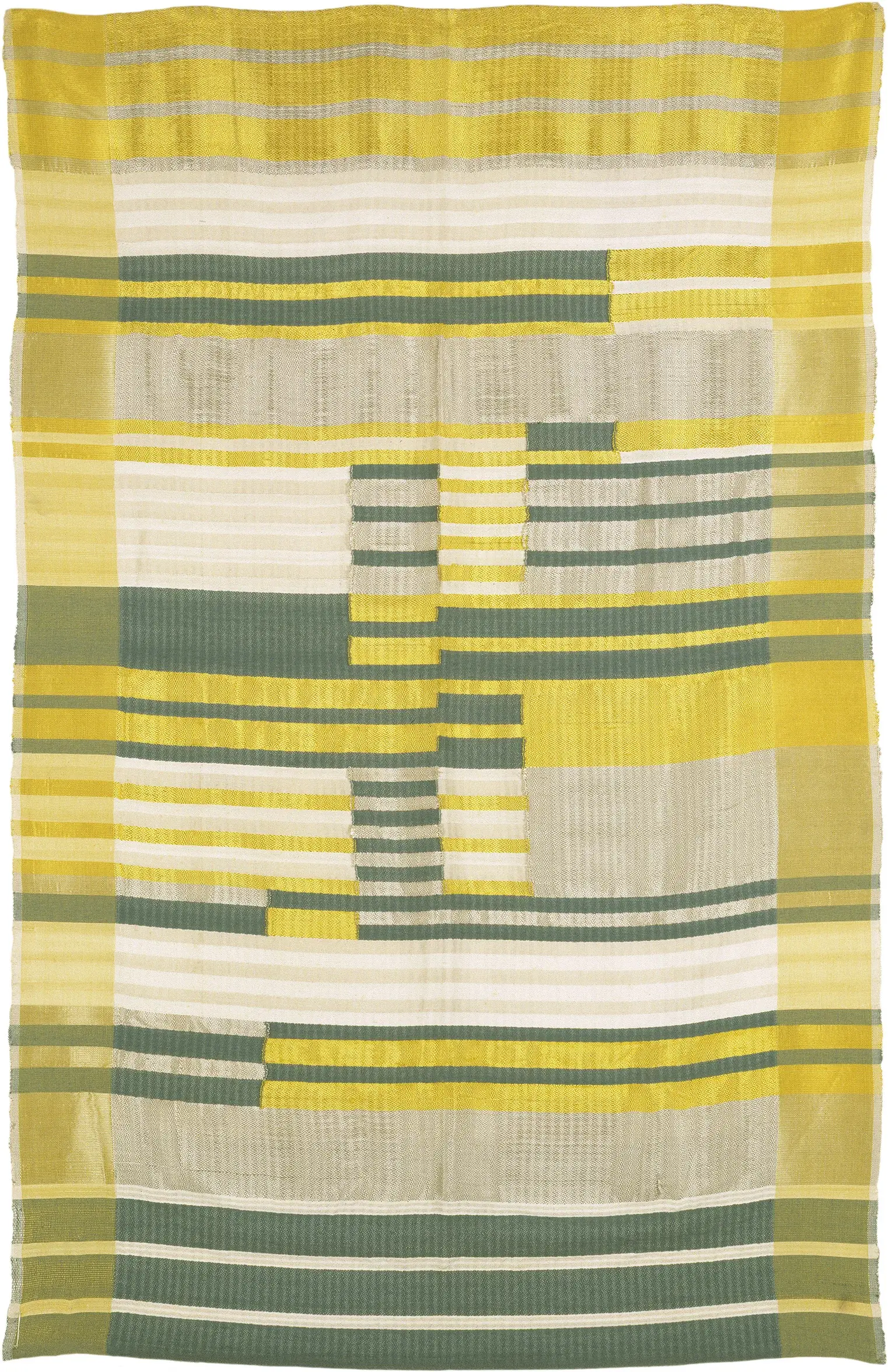
Anni Albers Wallhanging, 1925

Anni Albers Do I, 1973
Anni Albers was not only a pioneering designer and artist but also a dedicated educator and prolific writer. Her book “On Weaving” (1965) is regarded as a seminal text that expanded the horizons of the field by incorporating discussions on history, design, and technique. Through her teachings and writings, Albers became an influential thought leader, reshaping the way future generations perceive and approach textile design.
Another groundbreaking aspect of Albers’ work was her exploration of textiles as architectural elements. She innovatively used textiles to affect spatial aesthetics, experimenting with their acoustic properties, tactile sensations, and visual aspects to influence the perception of architectural spaces. Her works in this domain were not just functional or decorative, but they also interacted with and transformed the environments they occupied.
Anni Albers’ impact and influence extend far beyond her works. As one of the few women to emerge from the Bauhaus with significant recognition, she shattered gender barriers in the world of art and design. Her determination and success laid the groundwork for many other female artists and designers to forge their paths in the traditionally male-dominated field.
Anni Albers’ story is a testament to the power of original thinking. She turned a forced compromise at the Bauhaus into a lifetime of groundbreaking work, revolutionizing textile design’s perception and potential. Her influence resonates in the world of design even today, as contemporary artists and designers continue to draw inspiration from her work.
Anni Albers, through her visionary approach, taught us that no medium is inherently inferior and that true artistry lies in how one explores and exploits a medium’s potential. Her legacy serves as an enduring reminder of the transformative power of originality, innovation, and relentless pursuit of one’s passion.
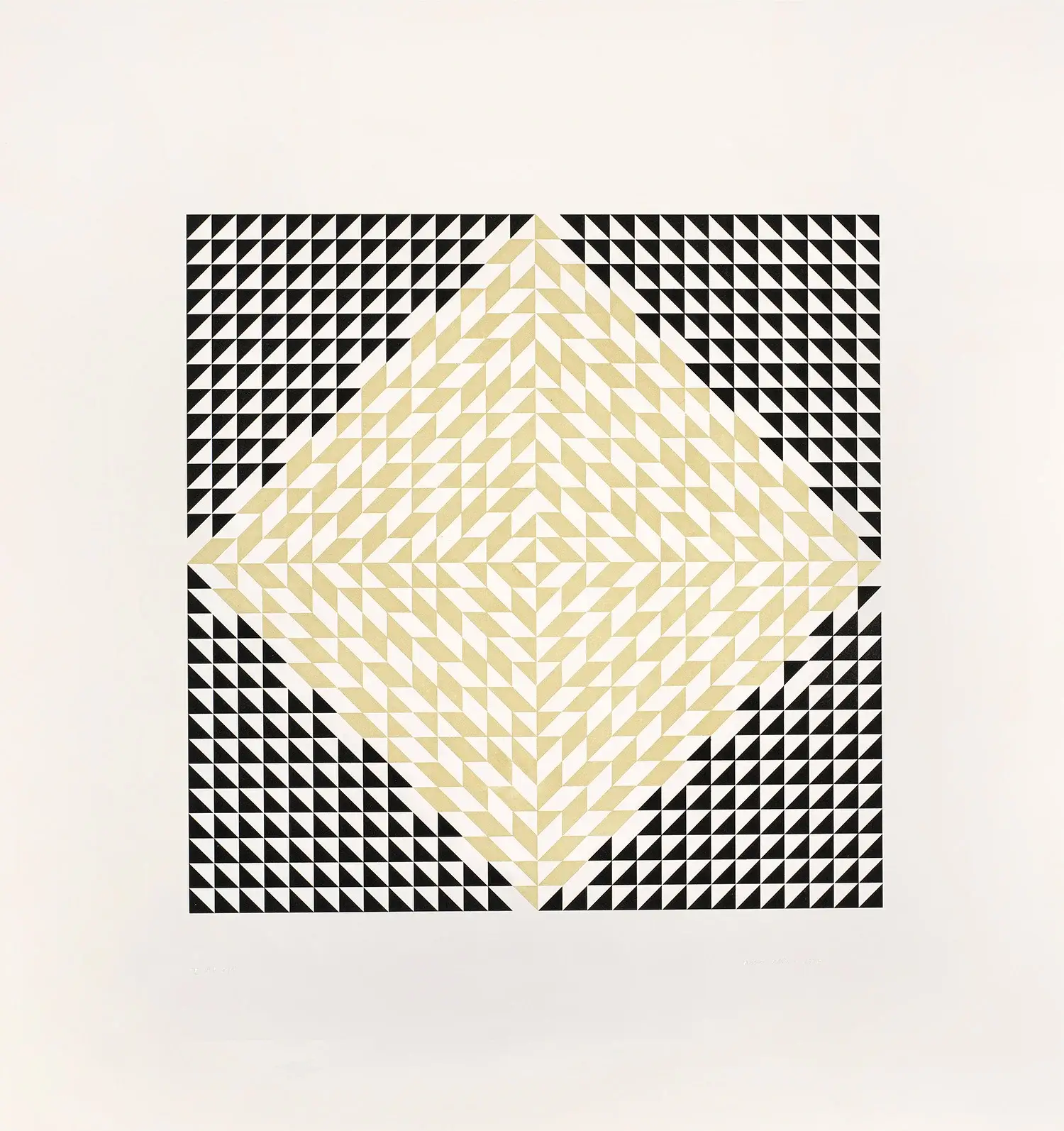
Anni Albers Second Movement V, 1978