Marketing for Architects in the Age of Insularity
The 2026 Edelman Trust Barometer surveyed 33,938 people across 28 countries. Its headline is blunt: trust has retreated inward, toward the small, the local and the familiar. For architecture and

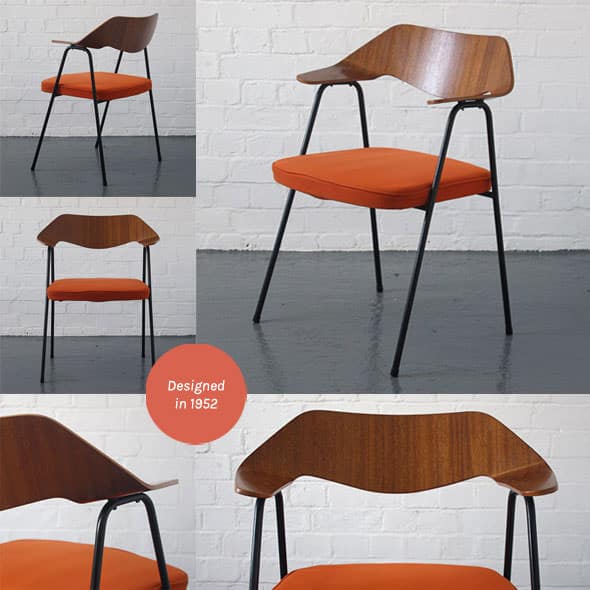
I’m very fortunate in my job to work around great designers and surrounded by great products. One of my fascinations about designing furniture and homewares is how to make the product feel comfortable and appear effortless whilst taking a lot of decisions about the aesthetics of the finished result.
One chair that I really like for this reason is the 675 chair by Robin Day. He created a comfortable sit using only a few elements, yet by making certain decisions created a distinct style and, more importantly, created a chair that could be produced relatively simply because of these fewer elements.
If you look, for example, at the back of the chair, this simple enough process of steam bending plywood was a revelation to Day which allowed him to create one piece for the arms and back from an inexpensive material.
“There’s this very vulnerable planet of ours with finite resources. Architects and designers have, I think, a fair responsibility for conserving energy and materials, and making things durable.”

The 675 chair is a design that has stood the test of time. Originally designed in 1952, the chair has remained unaltered since then. An awareness of design and successful manufacturing issues help to explain why, of all his early chair designs, it is the 675 that Robin rates most highly. Although saying that, he has clearly stated that the most successful chair is the Polyprop chair.
In the 675 chair design he overcame the problem of forming a one-piece moulded plywood chair with armrests, by creating a shape bent using a single rather than double curve. This result is disarmingly simple but also highly sophisticated, and the chair’s success lies in the perfect marriage of engineering, function and style.
“I think the first things that are relevant are that things should work well; they should function.”

This is my entry into Case Furniture Contemporary Blogging Competition. Find out more at: casefurniture.com.

